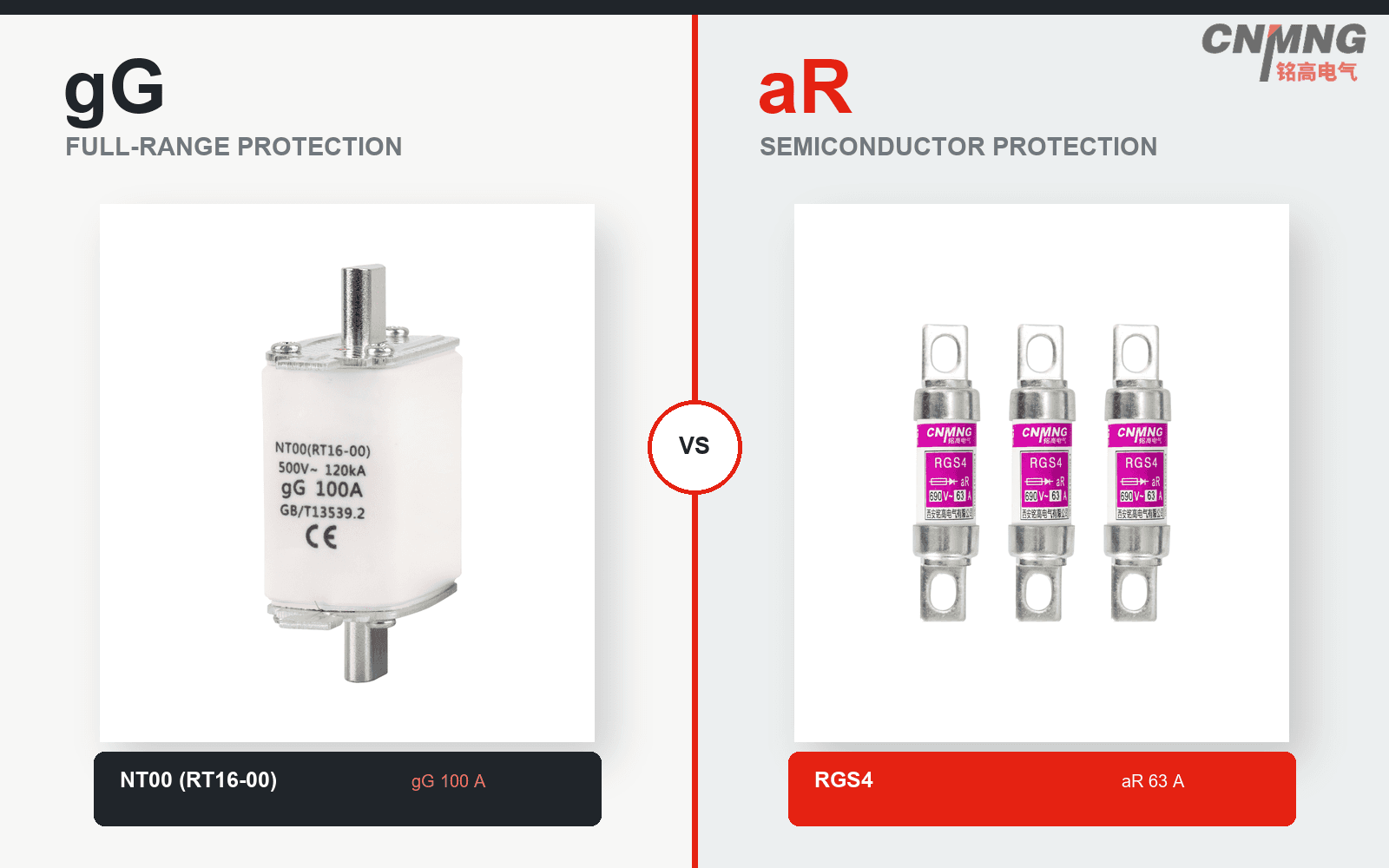
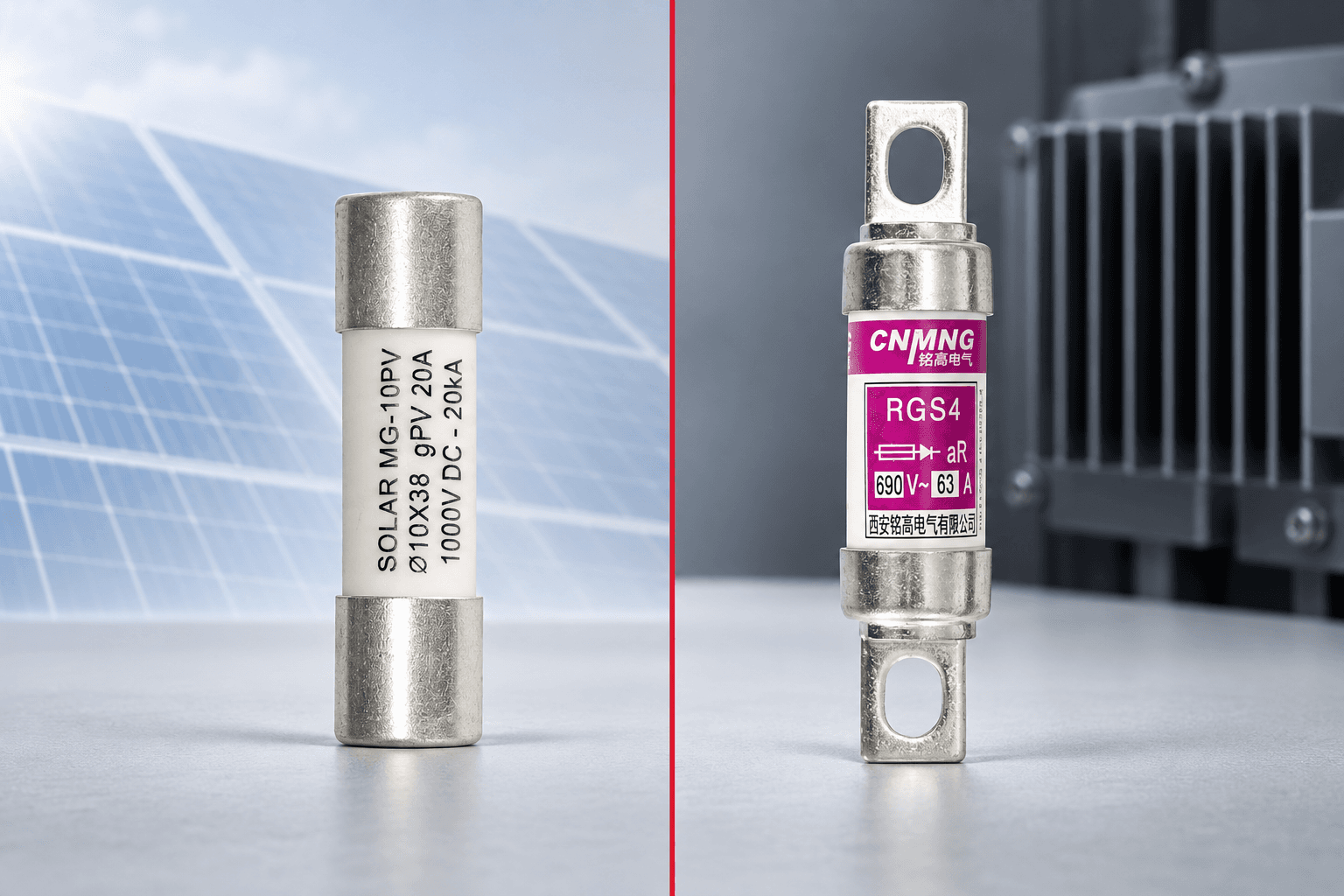
KEY TAKEAWAYS
- gPV fuse-links are developed for photovoltaic strings and arrays; high-speed fuse-links are developed around semiconductor protection.
- The same voltage and current printed on two fuse-links does not make them interchangeable.
- Compare the full time-current curve, minimum breaking current, I²t and the equipment withstand limits.
Different protection targets
A PV string can experience relatively low but sustained reverse overcurrent. A power semiconductor can be damaged by a much shorter pulse of energy. These two fault profiles place different demands on fuse construction and performance, which is why application category matters as much as the current rating.
What a gPV fuse is designed to do
gPV fuse-links are covered by IEC 60269-6 supplementary requirements for photovoltaic solar-energy systems. They are intended to protect PV strings and arrays and are designed to interrupt the low fault-current levels that can be present in these circuits. Typical positions include string inputs, array combiners and DC-side equipment, subject to the system design.
What a high-speed fuse is designed to do
IEC 60269-4 covers fuse-links used to protect semiconductor devices. High-speed fuses limit let-through energy so that diodes, IGBTs, thyristors and other power-electronic components see less thermal and mechanical stress during a short circuit. Their key coordination values include pre-arcing and total-clearing I²t, peak let-through current and the time-current characteristic.
Some high-speed classes provide short-circuit protection over only part of the current range and require separate overload protection. The exact class and manufacturer's documentation must therefore be checked before use.
A practical comparison
- PV string or array: begin with a gPV fuse and verify IEC 60269-6, system voltage and reverse-current conditions.
- Inverter, rectifier or semiconductor branch: begin with the equipment maker's required high-speed class and I²t limit.
- DC bus or battery circuit: evaluate the whole fault profile; neither the PV label nor the word “fast” is enough on its own.
- Always check fuse-holder compatibility and the DC breaking rating of the complete assembly.
Why substitution by dimensions is risky
Two fuse-links may share the same body size and fit the same mechanical space while having different operating curves, minimum breaking currents and energy limitation. A replacement should match the application category and electrical characteristics required by the equipment, then be checked against actual operating and fault conditions.
For example, a converter maker may specify a 690 V high-speed fuse with a maximum total-clearing I²t. Replacing it with a same-size gPV fuse rated 690 V and the same current still requires rejection unless the new fuse's curve, minimum breaking current and I²t are proven compatible. Matching three nameplate values is not enough.
Standards used in this article
The applicable scope and selection checks have been incorporated into the article above.
- GB/T 13539.6-2024 / IEC 60269-6:2021 — Supplementary requirements for photovoltaic fuse-links used in PV strings and arrays.
- GB/T 13539.4-2016 — China’s current supplementary requirements for fuse-links protecting semiconductor equipment.
- IEC 60269-4:2024 — International requirements for semiconductor fuse-links in circuits up to 1,000 V AC or 1,500 V DC.
Final fuse selection must be verified against the actual circuit, applicable standards and the selected product datasheet. Minggao can review your parameters before quotation.